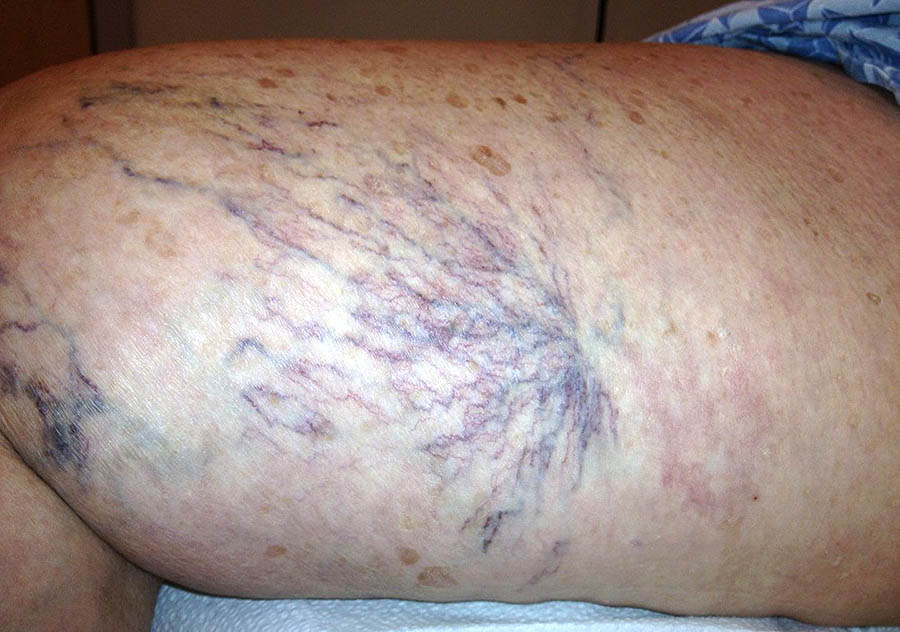
Sclerotherapy has been the standard answer for spider veins since the 1930s, and for most patients it still is. But a fair number of people walk into a consultation for spider vein treatment in Newington and learn that injections are not the right first move for them, at least not yet. That does not leave you stuck with the veins you have.
There are real alternatives, and in some cases the better plan is to treat something upstream before anyone touches the visible veins at all.
When Injections Get Ruled Out
A sclerosant is a chemical irritant placed directly into the vein, so the list of people who should wait or choose a different route is not short. A vein specialist will usually postpone or avoid injections for patients with any of the following:
- Pregnancy or active breastfeeding, since most practices wait until at least three months postpartum and many spider veins fade on their own in that window
- A documented allergy to polidocanol, sodium tetradecyl sulfate, or hypertonic saline
- A history of deep vein thrombosis or a known clotting disorder such as factor V Leiden
- Limited mobility, because walking after treatment is part of how the procedure stays safe
- An open wound, cellulitis, or active skin infection near the treatment area
- A patent foramen ovale paired with a migraine history, which makes some physicians cautious with foam
There is also the simple matter of preference. Some patients have a genuine needle phobia, and sitting through 20 to 40 injections in one leg session is not realistic for them.
Surface Laser Reaches the Veins a Needle Cannot
Transcutaneous laser works from outside the skin. A long-pulsed Nd: YAG laser at 1064 nm sends energy through the skin surface; the hemoglobin inside the vessel absorbs it, and the vein wall collapses and is cleared by the body over the following weeks.
It tends to be the better tool for the very fine vessels, the ones under about 0.5 mm that are too small to cannulate with even a 30-gauge needle. Facial telangiectasias around the nose and cheeks also respond well, where injections are rarely used at all. The American Academy of Dermatology notes that laser treatment for leg veins typically requires more than one session to clear an area.
Expect two to four sessions spaced six to eight weeks apart, with the snap-of-a-rubber-band sensation most patients describe as tolerable without numbing. Redness and mild swelling usually settle within 24 to 48 hours. Results build slowly, so judging the outcome before three months is premature.
Thermocoagulation for Small, Stubborn Patches
Thermocoagulation uses a very fine insulated probe placed against the skin to deliver a brief pulse of high-frequency energy to a single vessel at a time. It is slower than laser across a broad area, but it is useful on small isolated veins, on darker skin tones where laser pigment risk is higher, and on the ankle and foot where other methods can be uncomfortable.
Coverage is limited, so it works best as a finishing tool rather than a primary plan for widespread veins across both thighs.
Hidden Reflux Is Often the Actual Problem
Spider veins that keep coming back after treatment, cluster at the inner ankle, or arrive with aching, heaviness, and evening swelling are frequently a surface symptom of venous reflux in a deeper vein. Treating the visible network without addressing the pressure feeding it is why some people feel like they are paying to chase the same veins every year.
A duplex ultrasound answers the question in about 20 to 30 minutes. When reflux shows up in the great saphenous or small saphenous vein, the options shift toward endovenous ablation, radiofrequency closure, or medical adhesive, all performed in an office setting with local anesthetic.
Those procedures carry medical necessity in many cases, which also changes the insurance conversation. Dr. Lori Greenwald trained as a vascular surgeon and left hospital practice in 2003, so the underlying circulatory evaluation has always been part of how this practice approaches cosmetic-looking leg veins. Patients weighing a combined approach can read more about combining sclerotherapy with other vein treatments.
Compression Is Treatment, Not Just Aftercare
Graduated compression stockings do not erase existing spider veins, and no honest practice will claim otherwise. What they do is reduce venous pressure in the superficial system, which slows the formation of new vessels and relieves the ache that often comes with them.
For patients who cannot have any procedure right now, including pregnant patients, this is the main line of defense:
- 15 to 20 mmHg for mild heaviness, long flights, and general prevention
- 20 to 30 mmHg for visible veins with symptoms, which is the range most vein practices recommend
- 30 to 40 mmHg when swelling or skin changes are present, and usually only under physician direction
Put them on before getting out of bed, while the leg is at its smallest, and replace them every four to six months as the elastic fatigues. Patients who do eventually proceed with injections can review how long to wear compression stockings after spider vein treatment.
Habits That Keep New Veins From Forming
Genetics sets the baseline, and roughly half of adults develop some form of leg vein disease according to data compiled by the National Library of Medicine. Daily patterns still influence how fast new vessels appear.
- Break up long-standing or seated stretches every 30 to 45 minutes with a short walk or 20 calf raises
- Raise your legs above heart level for 15 minutes in the evening
- Keep weight stable, since added abdominal pressure transmits straight down the venous system
- Limit very hot baths and long sauna sessions, which dilate superficial vessels
- Use sunscreen on the face and chest, where UV exposure drives telangiectasia formation
What the First Visit Actually Covers
A proper evaluation starts with a standing exam, because veins collapse when you lie down and a seated-only look misses things. Expect a history that asks about pregnancies, family patterns, clotting events, hormone use, and how many hours a day you spend on your feet.
If symptoms point to reflux, ultrasound follows in the same visit at most practices. From there, you get an honest sort: which veins respond to laser, which need injections later, which require treating a feeder vein first, and which are not worth treating at all. The full breakdown of options lives in our guide to common spider vein treatments and recovery.
Frequently Asked Questions
Can Laser Fully Replace Sclerotherapy for Leg Veins?
For vessels under roughly 0.5 mm, laser is often the better choice, but injections still clear 1 to 3 mm reticular veins more efficiently in most patients. Many treatment plans use both across different sessions rather than picking one method for the entire leg.
How Long Until Spider Veins Fade After Laser Treatment?
Most visible fading happens between four and twelve weeks after each session, with final results judged at three to six months. The treated vessel is absorbed gradually by the body, so the leg keeps improving well after the last appointment.
Will Spider Veins Come Back After Treatment?
Treated vessels do not return, but new ones form in about 20 to 30 percent of patients within five years, more often when underlying reflux was never addressed. Compression, weight stability, and periodic touch-up sessions keep the legs looking clear long term.
Is Treatment Safe During Pregnancy?
No elective vein procedure is performed during pregnancy, and most practices wait three to six months after delivery. Many pregnancy-related spider veins fade on their own in that period, which is one reason waiting often means needing less treatment.
Schedule Your Vein Evaluation
If injections are not an option for you, there is still a plan worth having. Contact Vanishing Veins to book an evaluation with Dr. Greenwald and find out which approach fits your legs and your medical history.