Yoga is far more than just a sequence of stretches; it is a holistic approach to vascular health. If you are struggling with the heavy, aching, or swelling sensations of varicose veins in New Britain, yoga offers a low-impact, effective way to manage symptoms and improve your quality of life.
While yoga cannot “cure” existing damaged valves in the veins, it acts as a powerful preventative and palliative tool. Below is an in-depth exploration of how yoga impacts venous health, followed by an expanded guide to the most effective poses.
Understanding Varicose Veins and the Role of Yoga
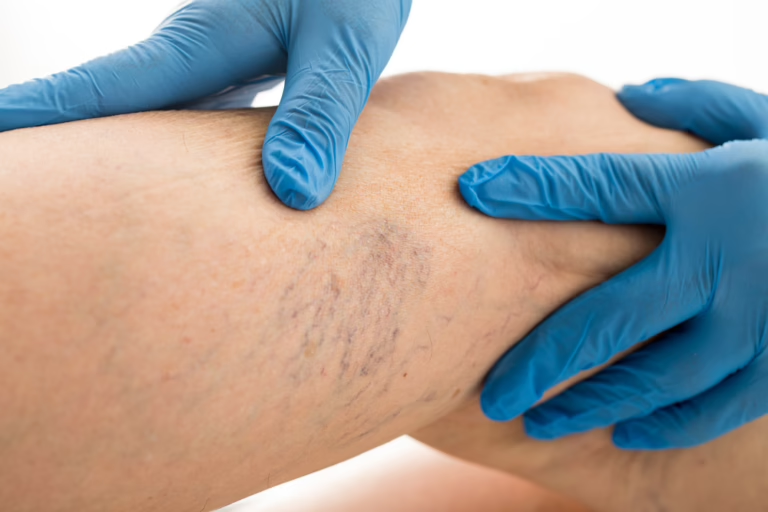
Varicose veins occur when the tiny valves in your veins become weak or damaged. When these valves fail, blood pools in the legs, causing the veins to stretch, twist, and bulge. This leads to the characteristic blue or purple “cord-like” appearance and physical symptoms like cramping, heaviness, and edema (swelling).
How Yoga Alleviates Venous Pressure
Yoga addresses these issues through three primary mechanisms:
- Inversion and Gravity: By elevating the legs above the level of the heart, yoga uses gravity to encourage “venous return.” Instead of the heart struggling to pump blood up from the ankles, the blood naturally drains toward the torso.
- The “Calf Muscle Pump”: The calf muscle is often called the “second heart.” When you engage in yoga poses that flex and extend the lower legs, the muscles squeeze the deep veins, forcing blood upward.
- Stress Reduction: Chronic stress can lead to high blood pressure, which puts further strain on the vascular system. The deep breathing (Pranayama) associated with yoga lowers cortisol and promotes vasodilation, easing the overall burden on your circulatory system.
6 Essential Yoga Poses for Varicose Veins
The following sequence is designed to move from foundational grounding to active circulation and, finally, deep restorative drainage.
1. Tadasana (Mountain Pose)
The Foundation of Alignment
Tadasana might look like “just standing,” but it is an active, engaged posture. It is the blueprint for correct body alignment. Poor posture often leads to uneven weight distribution, which puts unnecessary pressure on specific points in the legs, potentially worsening vein issues.
- How to do it: Stand with your big toes touching and heels slightly apart. Engage your quadriceps to lift the kneecaps, tuck your tailbone slightly, and roll your shoulders back.
- The Benefit: Practicing Tadasana tones the muscles of the thighs and calves. By distributing your weight evenly across both feet, you relieve the static pressure that builds up during long periods of sitting or standing incorrectly.
2. Uttanasana (Standing Forward Bend)
Enhancing Full-Body Circulation
This pose is a powerful way to stretch the entire posterior chain; the back of the legs where varicose veins are most common.
- How to do it: From a standing position, exhale and fold forward at the hips. If your hamstrings are tight, keep a slight bend in your knees. Let your head hang heavy.
- The Benefit: Uttanasana reverses the flow of blood for the upper body and provides a deep stretch to the calves and hamstrings. This stretching action helps prevent the “stiffness” that often accompanies pooled blood, making the limbs feel lighter and more mobile.
3. Navasana (Boat Pose)
Core Strength and Venous Elevation
Navasana is an abdominal strengthener, but its secondary benefit is the elevation of the lower extremities.
- How to do it: Sit on the floor with your knees bent. Lean back slightly, find your balance on your sit-bones, and lift your feet off the floor. If possible, straighten your legs so your body forms a “V” shape.
- The Benefit: Because the legs are held at an angle against gravity, the blood and lymph fluid that typically accumulate around the ankles are forced to move toward the pelvis. The intense muscle engagement also stimulates the deep veins.
4. Viparita Karani (Legs Up The Wall)
The Ultimate Restorative Drain
This is perhaps the most recommended pose for anyone with vascular issues. It is a “passive inversion” that requires zero effort but provides maximum relief.
- How to do it: Sit sideways against a wall, then gently swing your legs up onto the wall as you lay your back on the floor. Your body should form an “L” shape.
- The Benefit: This pose allows for total “lymphatic drainage.” It flushes out metabolic waste and carbon dioxide from the lower limbs. It is particularly effective after a long day of standing, as it instantly reduces the “heavy leg” sensation.
5. Sarvangasana (Supported Shoulder Stand)
Working Against Gravity
Often called the “Queen of Asanas,” this pose is a full-body inversion that completely flips the circulatory map.
- How to do it: Lie on your back, lift your legs and hips off the floor, and support your lower back with your hands. Your weight should rest on your shoulders and upper arms, never your neck.
- The Benefit: In this position, the legs are completely vertical. Gravity does 100% of the work in draining the veins. This pose is believed to “reset” the pressure within the venous walls, providing a temporary but profound relief from the swelling of varicose veins in Windsor.
6. Matsyasana (Fish Pose)
The Counter-Stretch and Regulatory Pose
Matsyasana is often performed after a shoulder stand to stretch the chest and neck, but its benefits for the legs are frequently overlooked.
- How to do it: Lie on your back with your legs straight. Slide your hands under your glutes, press into your elbows, and arch your chest toward the ceiling, letting the crown of your head rest lightly on the floor.
- The Benefit: Matsyasana regulates blood flow throughout the body. While the upper body is arched, the legs remain extended and active. This pose helps relieve the leg cramps that often strike varicose vein sufferers during the night.
Safety Precautions and Best Practices
While yoga is generally safe, those with severe varicose veins or those who have developed Deep Vein Thrombosis (DVT) must take specific precautions:
- Avoid Long Static Holds: If a pose causes throbbing, move out of it. Gentle movement is often better than holding a pose until the limb goes numb.
- Consult a Physician: If your veins are hard, warm to the touch, or bleeding, consult a doctor before starting a yoga regimen.
- Hydration is Key: Yoga helps move fluid, but you need to be hydrated to make sure your blood viscosity remains thin enough to flow easily through those narrowed or damaged valves.
Ready to say goodbye to the discomfort and visibility of varicose veins? At Vanishing Veins, we specialize in advanced, minimally invasive treatments that pick up where yoga leaves off. Contact us to help you achieve the smooth, pain-free legs you deserve.
This post was updated 2/17/26