
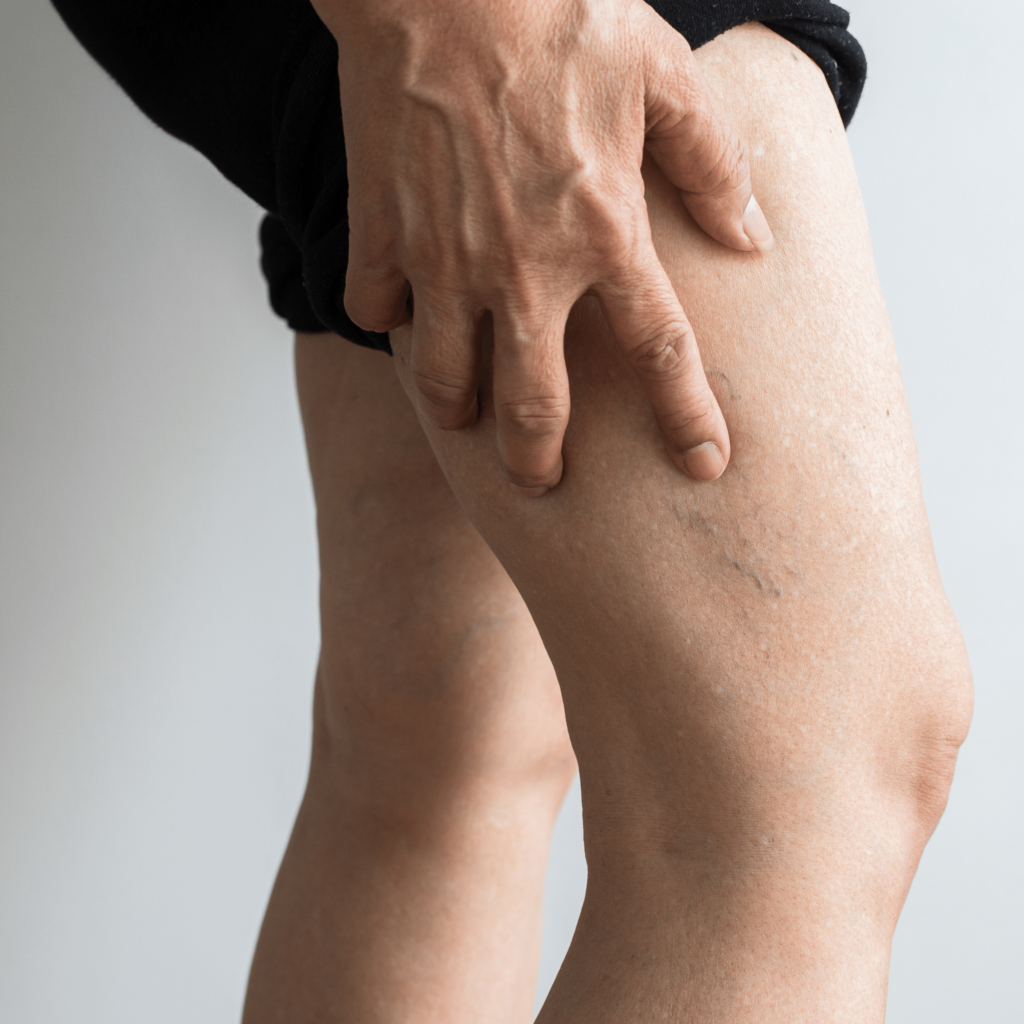
If you struggle with the discomfort of bulging, aching veins, you likely aren’t the first person in your family to do so. In the clinical exam rooms at Vanishing Veins, one of the most common refrains we hear from patients is, “I got my mother’s legs.”
It is a common sentiment, often shared with a mix of humor and frustration. But is there scientific merit to the idea that you can inherit a vascular condition? The answer is a definitive yes. While lifestyle and environment play significant roles, your genetic code provides the foundation upon which your vascular health is built.
Understanding the hereditary nature of vein disease is the first step in moving past “blaming Mom” and toward a proactive treatment plan. With the expertise of Dr. Lori Greenwald, a board-certified specialist, you can stop the cycle of hereditary vein disease in its tracks.
What the Data Says: The Statistical Link
The connection between family history and venous insufficiency isn’t just anecdotal; it is backed by decades of international research. When we look at the numbers, the hereditary link becomes impossible to ignore.
The Global Evidence
- The UK Study: In a major study conducted in the United Kingdom, a staggering 85% of patients seeking treatment for varicose veins reported a positive family history of the condition.
- The French Study: Researchers in France took it a step further, analyzing the specific risk based on parental history. They found that if both parents have varicose veins, your risk of developing them is approximately 90%.
- Single-Parent Risk: Even if only one parent is affected, the risk remains high. For women, the risk is about 60% if one parent has them; for men, it is approximately 25%.
This data suggests that while “environmental” factors like job type or weight matter, they often act as triggers for a genetic predisposition that was already present at birth.
Why Do Genes Matter? The Biology of Weak Veins
You might wonder exactly what it is that you are inheriting. You aren’t necessarily inheriting the varicose vein itself, but rather the structural weaknesses that allow them to form.
1. Weakened Vein Walls
In many families, the genes responsible for the production of collagen and elastin in the vein walls are less “robust.” This means that as you age, your vein walls are more likely to stretch and lose their shape under pressure. Once a vein wall stretches, the valves inside can no longer meet in the middle to close properly.
2. Valvular Incompetence
Some individuals are born with fewer valves in their leg veins, or valves that are naturally more prone to “leakiness.” When these valves fail, gravity pulls the blood back down toward the ankle; a process called reflux. This creates a high-pressure environment that forces veins to bulge and twist.
3. Blood Chemistry and Clotting
Genetics also dictate how your blood behaves. Some families have a hereditary tendency toward “stickier” blood or higher levels of clotting factors, which can increase the risk of complications like Deep Vein Thrombosis (DVT).
Environmental Triggers: When DNA Meets Daily Life
If genetics were the only factor, every person with “vein genes” would have identical symptoms. This is where environmental triggers come into play. These factors can “activate” your genetic predisposition or accelerate the progression of the disease:
- Occupational Demands: Jobs that require prolonged standing (nurses, teachers, retail workers) or prolonged sitting (truck drivers, office workers) put constant pressure on inherited weak valves.
- Weight and Nutrition: Obesity adds significant “load” to the pelvic veins, making it harder for blood to leave the legs.
- Hormonal Shifts: Pregnancy and menopause involve hormonal changes that naturally relax vein walls, often serving as the “tipping point” for women with a family history of vein disease.
- The Aging Process: Even the strongest veins lose some elasticity over time; for those with a genetic predisposition, this loss happens faster and more severely.
Redefining Care at Vanishing Veins
At Vanishing Veins, we recognize that you can’t choose your ancestors, but you can choose your vein clinic in Manchester. Dealing with a hereditary condition requires a physician who understands the long-term, progressive nature of vascular health.
The Expertise of Dr. Lori Greenwald
Dr. Greenwald is a Diplomate of the American Board of Venous & Lymphatic Medicine and a fellowship-trained Vascular Surgeon. This dual expertise is rare. While many “vein clinics” are run by doctors who treat veins as a sideline, Dr. Greenwald has dedicated her career to this field since 2003.
Having treated over 17,000 patients, she understands that a patient with a strong family history requires a more vigilant, complete diagnostic approach. We don’t just look at the veins you can see; we use advanced technology to find the ones you can’t.
The Vanishing Veins Suite of Specialized Services
Because hereditary vein disease often starts deep beneath the surface, a visual exam is never enough. At Vanishing Veins, we offer a full spectrum of specialized services:
| Service | Benefit for Hereditary Patients |
| High-Resolution Ultrasound | Identifies “silent” reflux in deep veins before they bulge at the surface. |
| Radiofrequency Ablation (RFA) | A permanent solution to shut down the “source” veins you likely inherited. |
| Ultrasound-Guided Sclerotherapy | Targets the complex network of feeder veins common in genetic cases. |
| Microphlebectomy | For the immediate removal of visible, ropey veins through tiny incisions. |
Prevention: Can You Beat Your Genes?
While you cannot rewrite your DNA, you can certainly manage how it affects your life. If you have a family history of varicose veins, early intervention is the “holy grail” of vascular health.
Steps to Take Early:
- Get a Baseline Ultrasound: If you are in your 20s or 30s and have “aching legs” and a family history, a screening at Vanishing Veins can catch valve failure early.
- Move More: Counteract your genetics by keeping your “calf muscle pump” strong through walking or swimming.
- Elevation: Give your veins a break from gravity by elevating your legs above your heart for 15 minutes a day.
- Specialist Consultation: Don’t wait for “ropey” veins to appear. A phlebologist can offer preventative strategies that primary care doctors might overlook.
Why Experience Matters in Genetic Cases
Hereditary vein disease is often more “persistent” than vein disease caused solely by injury or lifestyle. It requires a doctor who knows how to map the entire venous system to make sure that when a vein is treated, it doesn’t simply recur elsewhere.
By choosing Vanishing Veins, you are choosing a vein specialist in Avon that understands the nuances of vascular anatomy. Dr. Greenwald’s extensive experience, performing thousands of successful procedures, means she has the clinical judgment to know exactly which treatment will provide the longest-lasting relief for your specific genetic profile.
Take Control of Your Vascular Legacy
Varicose veins may be a “gift” from your parents, but they don’t have to be a burden you carry forever. You have the power to stop the progression of vein disease and prevent the pain, swelling, and skin changes that your relatives may have suffered through.
Let Vanishing Veins help you start a new chapter in your family’s health history. Our compassionate team and state-of-the-art facility are dedicated to giving you back the legs you deserve; healthy, beautiful, and pain-free.
Schedule Your Expert Evaluation
Don’t let your genetics define your quality of life. Experience the highest standard of vein care in the region.
Contact Vanishing Veins to schedule your consultation with Dr. Lori Greenwald.
This post was updated 2/18/26.


