You have likely seen the headlines on wellness blogs or heard it whispered in the back of a fitness studio: “Yoga is the natural cure for varicose veins.” It sounds like a dream; swapping medical procedures for a few downward dogs and a bit of mindful stretching. But where did this claim come from, and more importantly, is there any scientific truth behind it?
To evaluate whether yoga can truly “treat” or “cure” varicose veins, we have to look past the incense and the leggings and dive deep into the fascinating, mechanical world of human physiology.
The Ingenious Plumbing of Your Legs
Before we can address the yoga claim, we have to understand the “source code” of varicose veins in Enfield. Your circulatory system is a marvel of engineering, but it faces a constant, relentless enemy: gravity.
The heart is a powerful pump that sends oxygen-rich blood down to your toes with ease. However, once that blood reaches your feet, it has to make the long journey back up to the heart to be re-oxygenated. This is where the challenge begins. Unlike the trip down, there is no second heart in your feet to pump the blood back up.
The Muscle-Pump Mechanism
The body’s solution is ingenious. Your leg veins are buried deep within your calf and thigh muscles. As you walk, run, or simply flex your ankles, those muscles contract. These contractions squeeze the veins, physically pushing the blood upward. In essence, your leg muscles act as a “secondary heart.”
The Role of One-Way Valves
But what happens when you stop moving? Without a pump, gravity would immediately pull that blood right back down to your ankles. To prevent this, your veins are equipped with tiny, one-way valves. They act like “trap doors” that open to let blood flow toward the heart and snap shut to prevent it from flowing backward.
When the System Fails: The Birth of a Varicose Vein
Varicose veins are not just a cosmetic issue; they are a sign of mechanical failure. The medical term for this is Chronic Venous Insufficiency (CVI).
This occurs when the leaflets of those tiny one-way valves become weakened or damaged. Perhaps due to age, genetics, or prolonged standing, the valves no longer close perfectly. When they fail to seal, blood that was pumped upward “leaks” back down. This is known as venous reflux.
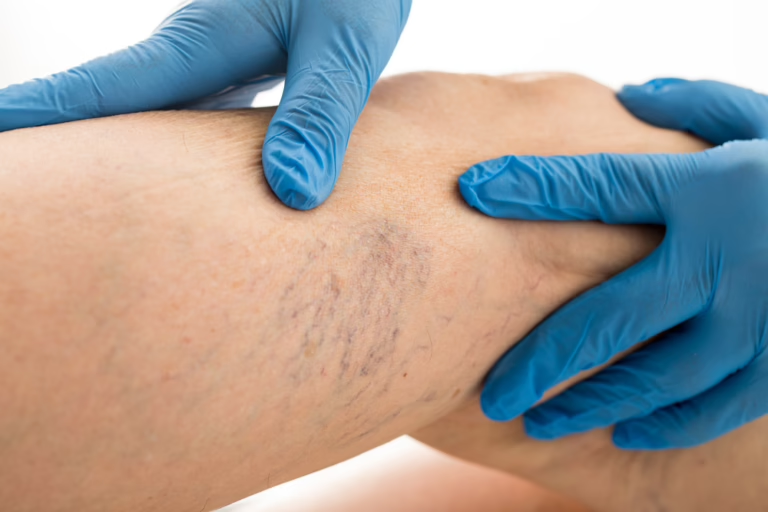
As the blood pools in the lower leg, the pressure builds. Under this constant internal pressure, the vein walls begin to stretch, bulge, and twist. The result is the ropey, purple, or blue protrusion we recognize as a varicose vein.
Yoga and Your Veins: What the Practice Actually Does
Now, let’s bring yoga back into the conversation. Yoga involves a series of asanas (postures) that range from standing balances to deep stretches and inversions.
The Temporary Benefit
When you practice yoga, you are moving. You are contracting your muscles, holding poses, and often elevating your legs.
- Contraction: Poses like “Warrior II” or “Chair Pose” engage the calf and thigh muscles, which helps move blood out of the legs temporarily.
- Inversion: Poses like “Legs-Up-The-Wall” (Viparita Karani) use gravity to help drain blood toward the heart.
While you are in these poses, you may feel a temporary relief from the heaviness or aching associated with varicose veins. Your legs might feel “lighter” immediately after a session.
The Permanent Reality
Here is the catch: Yoga cannot repair a broken valve. Think of a leaky faucet. You can mop up the water on the floor all day (the equivalent of doing yoga to move the blood), but unless you fix the valve in the faucet, the water will start pooling again the moment you stop mopping.
Once you roll up your yoga mat and stand back up, gravity takes over. Because the valves are still incompetent, the blood will immediately begin to leak back down, and the veins will remain engorged. Yoga is a fantastic way to manage symptoms and improve overall circulation, but it is not a “treatment” that reverses the underlying structural damage of the vein.
Searching for the Science: What Does the Research Say?
In the world of evidence-based medicine, we look for clinical trials; studies that compare a treatment against a control group to see if it actually works.
In a thorough review of medical literature, the evidence for yoga as a treatment for varicose veins is virtually non-existent. In fact, a search of global medical databases yields exactly one case study regarding yoga for varicose vein treatment. One case is an anecdote, not a scientific consensus.
There is no data to suggest that stretching or posing can tighten a loose valve or shrink a distended vein wall back to its original state. While some wellness centers may list “Seven Poses to Cure Varicose Veins,” they are often confusing symptom management with clinical resolution.
The Potential Dangers of Ignoring Medical Advice
While yoga is generally great for your health and mental well-being, relying on it as a primary treatment for vein disease can be risky. If left untreated, the “pooling” of blood caused by faulty valves can lead to more serious complications, including:
- Skin Ulcers: Chronic pressure can cause skin breakdown near the ankles.
- Blood Clots: Stagnant blood is more prone to clotting, which can lead to Superficial Thrombophlebitis or even Deep Vein Thrombosis (DVT).
- Hyperpigmentation: The skin may become permanently stained dark brown or red due to blood leaking into the surrounding tissue.
Yoga cannot prevent these clinical progressions once the valves have failed.
Why Medical Intervention is the Only Real Answer
If you want to get rid of varicose veins, you need to address the source: the failing valves and the damaged vein. Modern vein treatments in Canton are designed to close off the “leaky” vein entirely, allowing the body to naturally reroute blood flow to the healthy veins deeper in the leg.
Modern Treatment Options
Today’s treatments are minimally invasive and far more advanced than the “vein stripping” of the past. They include:
- Endovenous Laser Treatment (EVLT): Using laser energy to seal the problematic vein.
- Sclerotherapy: Injecting a solution that causes the vein to collapse and eventually be reabsorbed by the body.
- Radiofrequency Ablation: Using heat to close the damaged vessel.
These procedures are performed in an office setting, usually take less than an hour, and allow you to return to your normal activities (including yoga!) almost immediately; but this time, with veins that actually work.
Trust the Experts at Vanishing Veins
At Vanishing Veins, we understand the frustration of dealing with uncomfortable and unsightly leg veins. We also believe in giving our patients “the real skinny.” While we encourage a healthy, active lifestyle that includes yoga for its many mental and cardiovascular benefits, we won’t tell you it’s a cure for a medical condition that requires professional intervention.
Our Legacy of Care
We have been a staple of the Connecticut medical community for nearly twenty years. In that time, we have:
- Treated over 15,000 patients successfully.
- Utilized the latest technology to guarantee virtually painless results.
- Built a reputation for excellence under the leadership of Dr. Lori Greenwald.
Dr. Greenwald is a recognized leader in the field, having won numerous awards and featured across various media outlets for her expertise in vascular health. When you come to Vanishing Veins, you aren’t just getting a procedure; you are getting a customized plan from a team that knows exactly how to fix the “plumbing” and get you back on your feet.
Take Charge of Your Vein Health Today
Yoga is wonderful for your soul, but it won’t fix your valves. If you are tired of the aching, the swelling, and the appearance of varicose veins, it is time to seek a solution that actually works.
Don’t wait for your symptoms to progress. Take the first step toward healthier, more beautiful legs by scheduling a consultation with the experts.
Contact Vanishing Veins today at to get you a treatment plan that delivers real, lasting results.