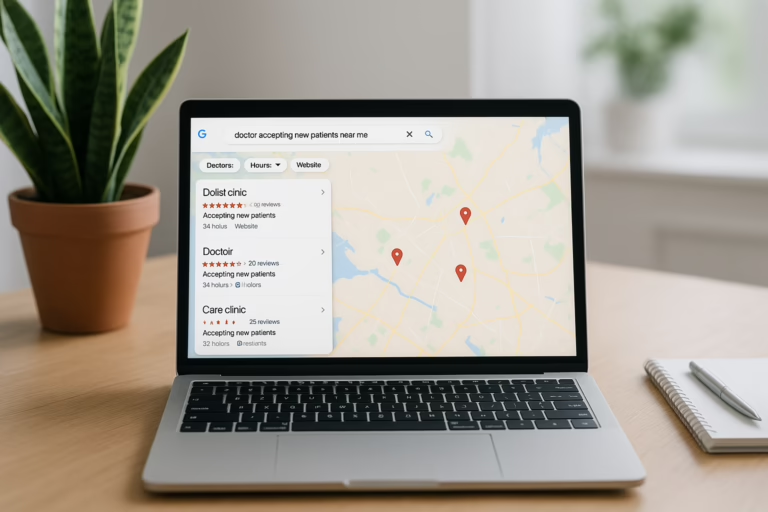
The honest answer to the telehealth vs in person doctor visit question comes down to one thing: does your doctor need to touch you, image you, or treat something that day? Roughly two-thirds of routine follow-ups, medication checks, and result reviews work perfectly well over video. The other third, including anything involving a physical exam, ultrasound, or a procedure, belongs in an exam room.
Most articles on this topic stop at convenience and cost. The more useful question, especially if you are dealing with leg symptoms, is which specific findings a camera simply cannot capture.
Telehealth and Telemedicine Are Not Quite the Same Word
Telemedicine usually refers to clinical care delivered remotely: a video appointment where a physician evaluates symptoms, adjusts a prescription, or reviews labs. Telehealth is the broader umbrella, covering remote monitoring, patient education, secure messaging, and administrative check-ins alongside clinical visits.
In everyday conversation people use them interchangeably, and that is fine. What matters more is knowing what your practice offers, since some clinics only do phone calls while others run full video platforms with photo uploads and remote blood pressure readings. The federal resource at telehealth.hhs.gov is worth a read if you want the government’s definition and current coverage rules.
Problems a Video Appointment Handles Well
Virtual care earns its keep on visits that are mostly conversation and review. If the decision hinges on your history, your symptom pattern, or a number on a lab report, a screen works about as well as a chair in the office.
- Lab and imaging result reviews, including cholesterol, thyroid, A1c, and vitamin levels
- Medication management and refills for stable chronic conditions such as hypertension or reflux
- Post-procedure check-ins where you feel well and just need questions answered
- Rashes, minor skin changes, and healing incisions you can photograph in good light
- Screening conversations about whether a symptom warrants a full workup
- Behavioral health and counseling, where research has repeatedly found virtual sessions comparable to in-office therapy for many conditions
Time savings are the most measurable benefit for patients. Studies of telemedicine programs have found patients save roughly 60 to 100 minutes per visit once you count driving, parking, and waiting room time, and one large health system study finds meaningful travel cost savings per appointment as well.
Why Leg Vein Symptoms Almost Always Need an Exam Room
Vein disease is a good example of care that resists the screen. A photo of a bulging vein tells a physician almost nothing about what is happening underneath, because the visible vein is often the last symptom of a valve problem that started inches higher in the leg.
Diagnosis depends on a duplex ultrasound, which maps blood flow direction and measures how long blood refluxes backward through a valve. Reflux lasting more than half a second in a superficial vein is the standard threshold for venous insufficiency, and there is no remote substitute for that measurement.
Hands matter too. Palpating for tenderness along a vein, checking for pitting edema, assessing skin texture near the ankle, and comparing calf circumference are all exam findings that change the plan. Patients who come to our vein doctors in Windsor, CT for a first evaluation are scheduled in person for exactly this reason.
Symptoms That Should Skip the Video Queue
- A leg that is suddenly swollen, warm, red, or painful, which can signal a clot and needs same-day imaging
- A firm, tender cord under the skin along a vein, a possible sign of superficial thrombophlebitis
- An open sore or ulcer near the ankle that has not healed in two weeks
- Bleeding from a varicose vein, which is uncommon but urgent
- Chest pain, shortness of breath, fainting, or new neurological symptoms, which belong in an emergency department rather than any scheduled visit
What Each Type of Visit Typically Costs
Cost is where the comparison gets muddier than most people expect. With insurance, many plans now apply the same specialist copay to a video appointment as an office visit, often $25 to $60, though some carriers discount virtual care or waive the copay entirely.
Without insurance, a telehealth visit through a national platform generally runs $40 to $90, while a direct-pay visit with your own physician usually falls in the $75 to $250 range depending on complexity. We break the numbers down further in our post on what a private practice office visit costs without insurance.
One caveat worth budgeting for: a cheap virtual visit that ends with “you need an ultrasound” costs more in total than booking the in-person evaluation first. The American Medical Association’s digital health resources track how payment rules keep shifting, and 2025 brought another round of adjustments to what Medicare will and will not cover remotely.
The Hybrid Rhythm That Works Best
In practice, most patients do best alternating. The first appointment is in person, because that is when the exam and ultrasound happen and when the treatment plan is built. Follow-ups after that can often be virtual unless something has changed.
A typical vein care year might look like an in-person consultation and ultrasound, a treatment session or two in the office, a video check-in at four weeks, and an in-person recheck at six months. Scheduling matters as well, since compression stockings and healing time are simply easier in cooler months, which we explain in our vein care calendar.
Patients traveling from further out, including those we see at our Tolland, CT vein practice, tend to appreciate the hybrid approach most, since it cuts the number of drives without cutting the quality of the evaluation.
How to Get More Out of Either Visit
Preparation changes the outcome more than the format does. Before a video appointment, take a current blood pressure reading if you have a cuff, gather your medication bottles, and photograph any skin or vein changes in daylight rather than under a bathroom light.
Before an office visit, wear or bring clothing that lets you expose the area being examined, and write down when symptoms are worst. Leg heaviness that peaks after a long shift points somewhere different than swelling that is present the moment you wake up.
Frequently Asked Questions
Is It Better to Do Telehealth or In-Person?
Telehealth is better for roughly 60 to 70 percent of follow-up and medication-management appointments, while in-person care is better for any first evaluation, physical exam, imaging, or procedure. The deciding factor is whether a diagnosis or treatment decision depends on touch, vitals, or imaging that cannot be gathered at home.
What Are the Disadvantages of Virtual Visits?
The main disadvantage is the missing physical exam, which means no palpation, no auscultation, no ultrasound, and no in-office testing. Add connectivity problems, licensing rules that restrict care across state lines, and the fact that some conditions get misjudged from a low-resolution camera image.
When Should You Not Use Telehealth?
Skip telehealth for any emergency, including chest pain, difficulty breathing, severe bleeding, fainting, or sudden one-sided weakness, and call 911 instead. Also avoid it for new undiagnosed symptoms that require an exam, suspected blood clots, non-healing wounds, and anything requiring an injection, ultrasound, or in-office procedure.
Can You Bill a Telehealth and Office Visit on the Same Day?
Generally no, unless the two services are clinically distinct and separately documented, in which case a modifier such as 25 may apply. Most payers consider a same-day virtual and in-person encounter for the same problem a single episode of care, so only one visit is reimbursed.
Schedule Your In-Person Vein Evaluation
If your legs ache, swell, or show veins that were not there a year ago, the evaluation needs an ultrasound and a hands-on exam before any treatment plan makes sense. Call our office to book an in-person consultation, and we will handle appropriate follow-ups by video so you spend less time driving and more time recovering.